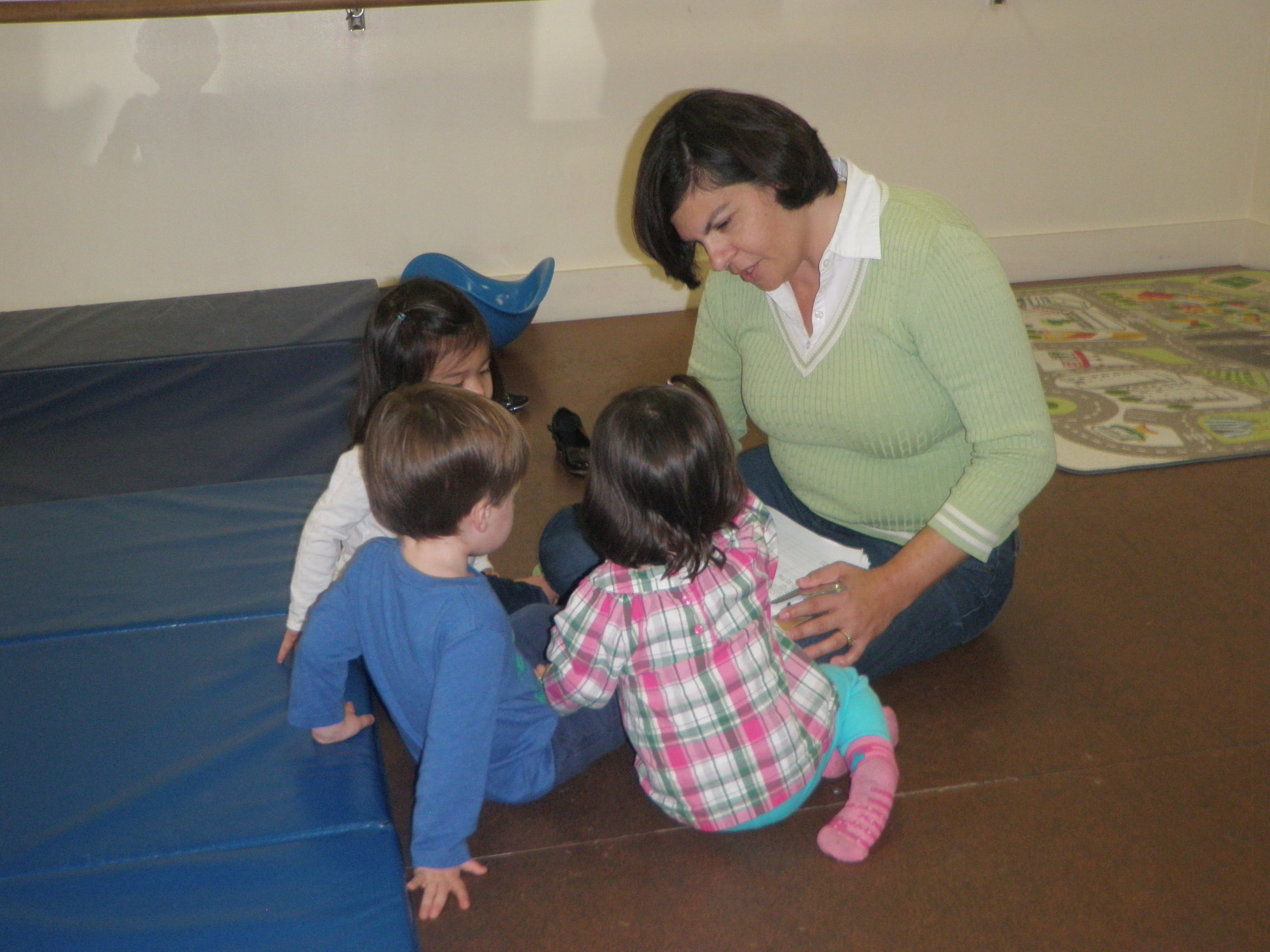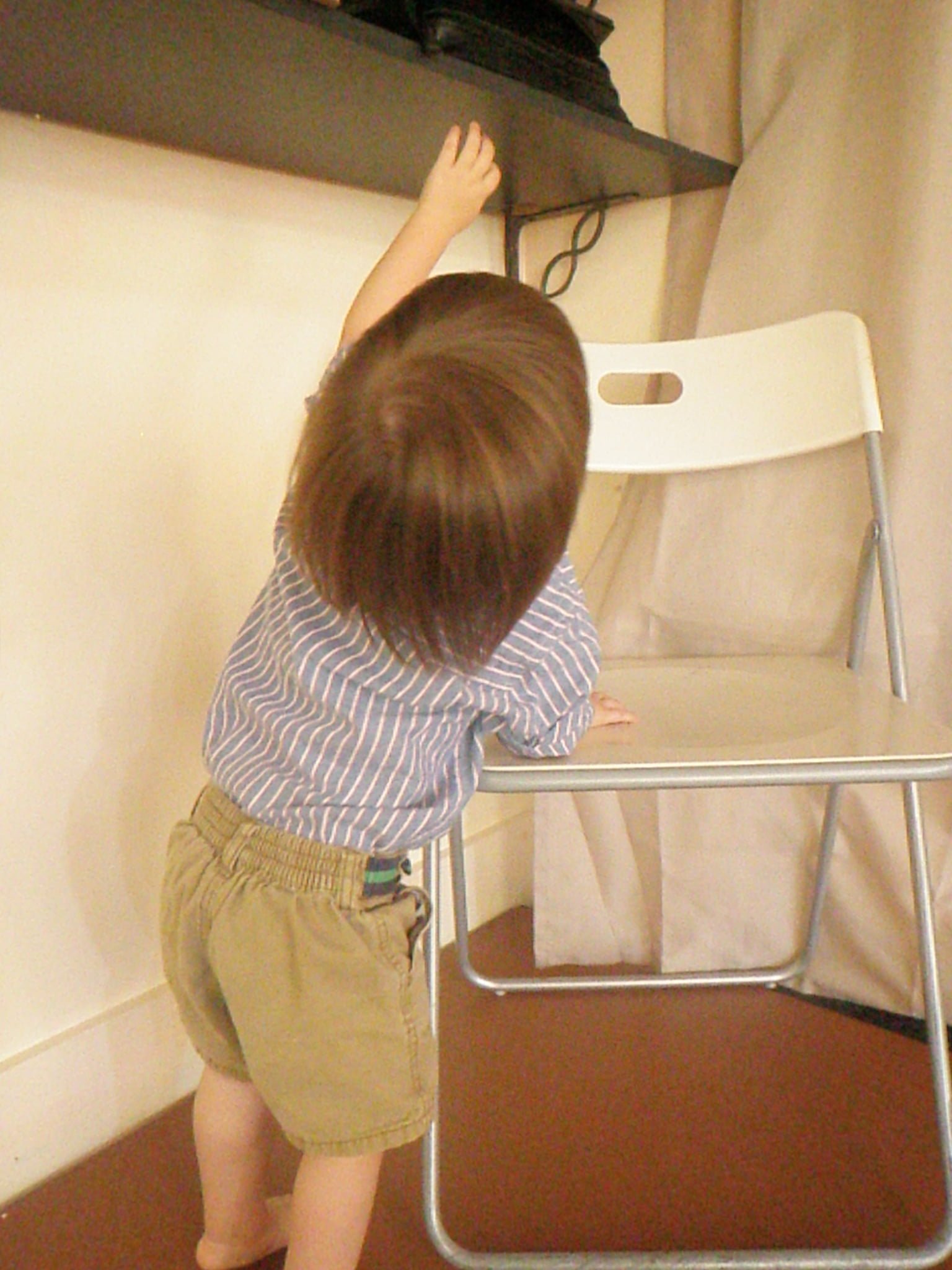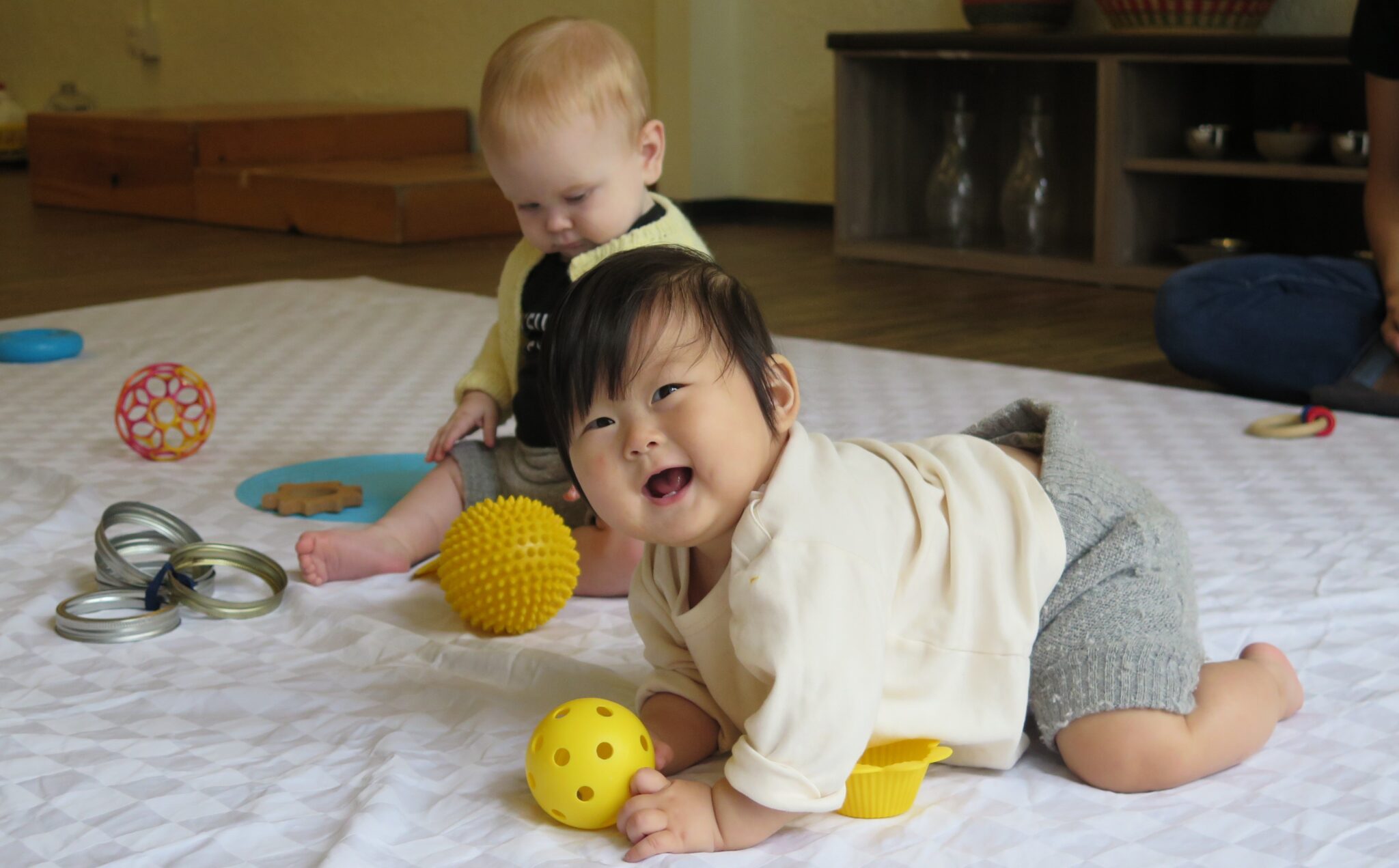
The RIE® Parent-Infant Guidance™ class is a unique opportunity to slow down. For ninety minutes, you get to do nothing. Or is it really nothing? In fact, there’s so much happening. We learn to slow down, observe, connect with our children, and truly see what they’re doing.
Sometimes our busy minds make it hard to just be. Maybe we’ve been told that playing with babies is something we should always be doing, and without it, we’re not fulfilling our parenting responsibilities. While playing with your baby can be a lovely, joyful experience for both of you, today I want to highlight something else: the value of sensitive observation and independent play.
So, I gently ask parents not to play with toys during class while we observe the children. Here’s why:
• When the baby is very young, just lying on the blanket, maybe not doing much – it’s tempting to pick up a ball and toss it in the air or spin a toy around. I understand that urge! But let’s look at it from the baby’s perspective: everything is new. The world is new. The room is new. The surface they’re lying on is new. The people around them are new. Even their own body sensations are new. They don’t need extra stimulation right now. When they’re ready, they’ll reach for a toy and begin to explore. At this stage, they’re already busy processing all the information around them.
• The mobile baby on the blanket may be focused on movement. This baby is exploring new positions, learning how to reach, turn, and move forward or backward. These are big, important discoveries. They don’t need someone rolling a ball or a car to them; no extra entertainment required.
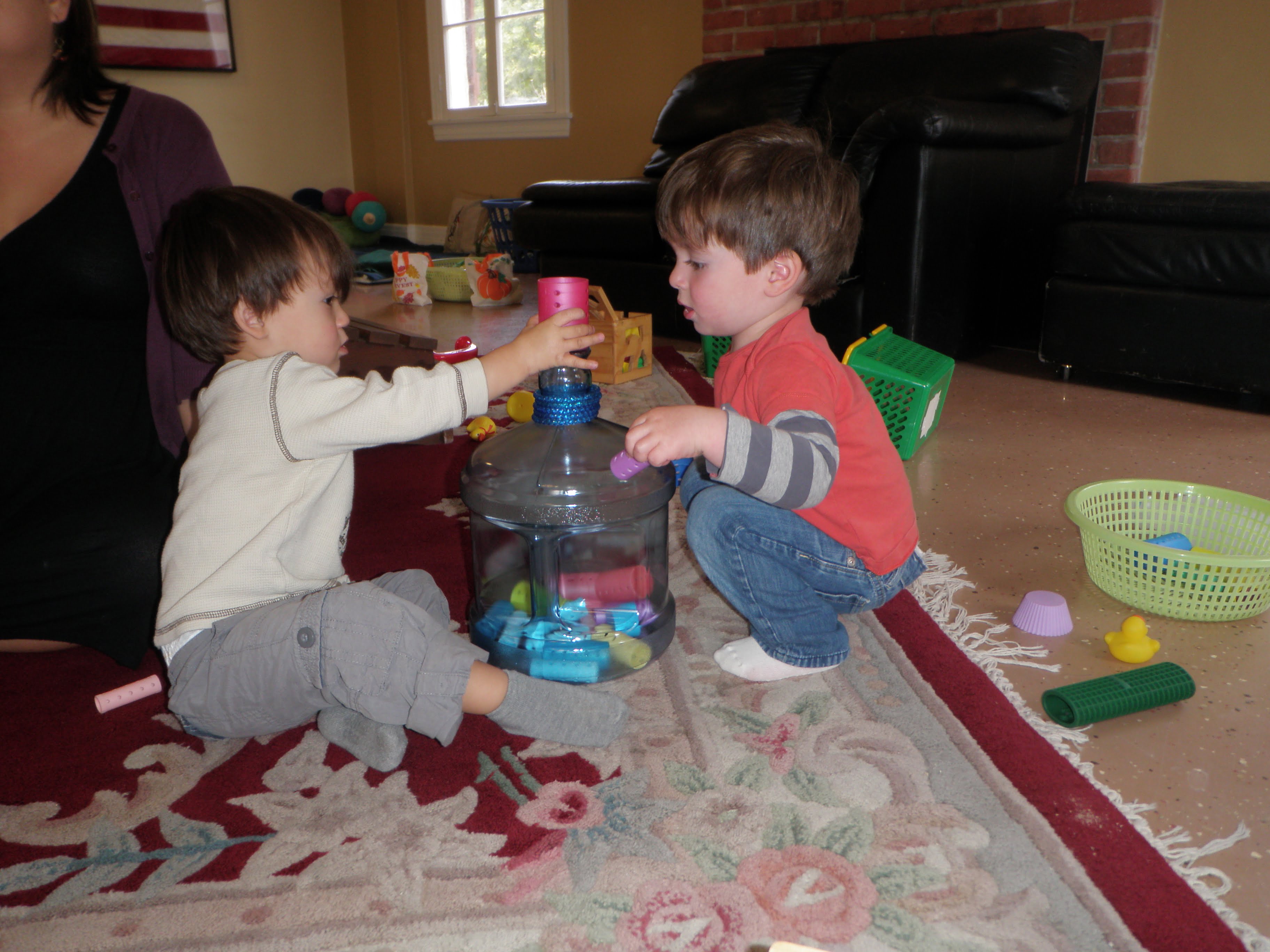
• When a baby begins actively exploring toys and items in the room, they’re learning about properties: texture, size, weight, balance, gravity the basic laws of physics! If we start building with blocks or rolling cars ourselves, we may unintentionally distract them from their own important discoveries.
• When a young toddler brings you a toy, it’s a beautiful opportunity to connect. Look at the toy together. Maybe name the color or examine it side by side. There’s no need to rush into teaching or modeling how to “use it properly.” Let the child take the lead in discovering what the toy means to them.
• An older toddler may bring you a toy with a specific purpose. Maybe they’re offering you pretend coffee or a meal. Of course, you’ll want to respond. Take a sip or a bite! Just remember to let them guide the play. If you have an idea or suggestion, wait before introducing it, and be okay if they choose to do it their way. We don’t need to overwhelm toddlers with too many directions, like:
“Now feed the doll; the doll is hungry. Give the doll to Susie. Susie wants the doll. Ah, where’s the bus? Go get the bus. Put the doll into the bus. Now pull the bus by the rope. Oh no, the doll fell off! Put her back in…”
Let’s try to pause the chatter and practice sensitive observation.
What is Sensitive Observation?
It’s when you sit comfortably, bring your attention to the present moment, and truly watch what your child is doing without jumping in to teach or direct. It’s about being available and curious, without an agenda.
Sensitive observation helps you:
- Learn about your child: how they move, what they like and don’t like, how they explore and discover.
- Create a deeper connection between you and your child. Children know where our attention is. They feel when we are fully present versus when we’re multitasking.
- Send the message that what they are doing matters. That their activity is valuable to us.
Read more about how to trust in the child to be an initiator, an explorer, and a self-learner.
Let me know if you want more information about RIE® Parent-Infant Guidance™ Classes.
Wishing you all the best in this difficult yet exciting journey of parenting!
Warmly,
Teacher Kira